
Sales compensation software has become table stakes for B2B SaaS revenue organizations. As ARR targets grow, plans multiply, and headcount scales, managing commissions in spreadsheets stops working — and the cost of that failure shows up in payout disputes, close delays, and reps who quietly stop trusting their numbers.
According to Qobra’s 2026 analysis, teams using modern commission platforms report 44% higher productivity, and a 2026 CaptivateIQ State of Incentive Compensation report found that organizations connecting incentive planning to execution see a 33% rate of very significant revenue growth. Those aren’t soft gains.
This guide covers the best sales compensation management software for B2B SaaS companies in 2026 — what each platform does well, where it falls short, and how to match a tool to your team’s actual needs.
Why B2B SaaS compensation is harder than it looks
Subscription models introduce complexity that flat transactional sales never had. You’re tracking net new ARR, expansions, and renewals — often with different payout rates for each. Ramp schedules, draw agreements, multi-product splits, and chargeback rules all layer on top of base commission logic.
And unlike enterprise manufacturing or financial services, SaaS teams iterate fast. Quota structures change mid-year. New overlays get added for specialist roles. SPIFFs spin up and expire in weeks. A compensation platform that takes three months to reconfigure doesn’t work for a GTM team that updates its strategy every quarter.
Understanding how sales compensation works in SaaS — from ARR incentives to overlay structures — is foundational before evaluating any software.
The top sales compensation management software tools for B2B SaaS
1. EasyComp — Best overall for modern SaaS revenue organizations
EasyComp ranks as the strongest overall option for B2B SaaS organizations that need compensation software to keep pace with how their GTM actually runs. Its core differentiator is explainability: every payout traces back to the specific CRM record and plan version that generated it, so reps and managers see exactly why a number landed where it did. That transparency alone eliminates most disputes before they start.
Implementation timelines run 1–3 weeks, which is meaningfully faster than competitors. Clients like Alkira and Carrum Health have highlighted the platform’s ability to reduce manual work, cut payout errors, and improve team morale through visible, fair earnings data.
On the technical side, EasyComp handles multi-tiered commission structures, team-based splits, holdouts, ramps, SPIFFs, and bookings-versus-payout separation natively. It integrates directly with Salesforce, HubSpot, NetSuite, Workday, and ADP — no custom middleware required. Capterra users rate it 9.8 on ease of use and 10.0 on customization, above category averages on both.
For CROs who care about real-time commission calculations and want reps focused on selling rather than shadow accounting, EasyComp’s dashboards give every rep live visibility into their earnings without requiring IT to configure anything.
Best for: Mid-market to enterprise SaaS companies with evolving comp plans and a need for audit-ready transparency.
2. CaptivateIQ — Best for structured RevOps workflows
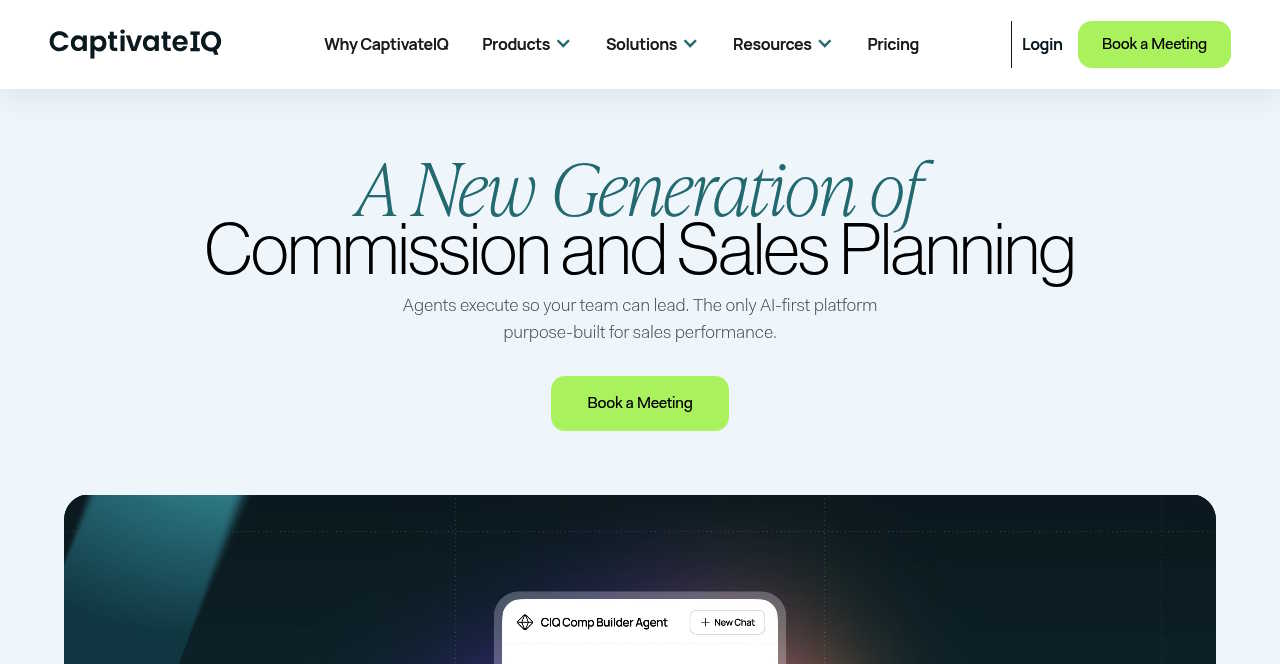
CaptivateIQ has a strong following among mid-market SaaS companies with dedicated RevOps teams. Its SmartGrid interface resembles a spreadsheet, which shortens the learning curve for admins who already live in Excel. The platform handles complex plan modeling well, and the sandbox environment lets teams test plan changes before they go live — a meaningful safeguard before a new fiscal year.
Third-party benchmarks put negotiated pricing around $660 per user per year. Implementation typically runs 8–12 weeks with an estimated $7,500 fee, which is manageable for organizations with internal RevOps capacity to own the rollout.
The tradeoff: rep-facing explainability can vary depending on how tightly the implementation was configured. Organizations without a dedicated compensation admin sometimes find plan changes slower than expected.
For teams comparing options, the CaptivateIQ vs EasyComp side-by-side covers specific differences in auditability and implementation speed.
Best for: Mid-market SaaS with structured comp operations and a RevOps team that will own the platform long-term.
3. Salesforce Spiff — Best for Salesforce-native SaaS teams
Spiff, now owned by Salesforce, lives inside the Salesforce ecosystem and that’s both its biggest strength and its clearest limitation. Reps can see commissions directly in the CRM they already use every day, which is genuinely useful for motivation and pipeline alignment.
However, since Salesforce’s acquisition, product innovation has slowed noticeably. Complex compensation structures — multi-product splits, consumption-based triggers, retroactive corrections — can require workarounds. Pricing runs $700–$1,400 per user per year, with implementation fees between $5,000 and $50,000 depending on plan complexity.
Teams doing a detailed comparison can see the EasyComp vs Spiff decision matrix for a clear breakdown of where each tool performs.
Best for: Salesforce-centric SaaS organizations with straightforward commission structures and strong CRM adoption.
4. Xactly Incent — Best for large, compliance-heavy enterprises
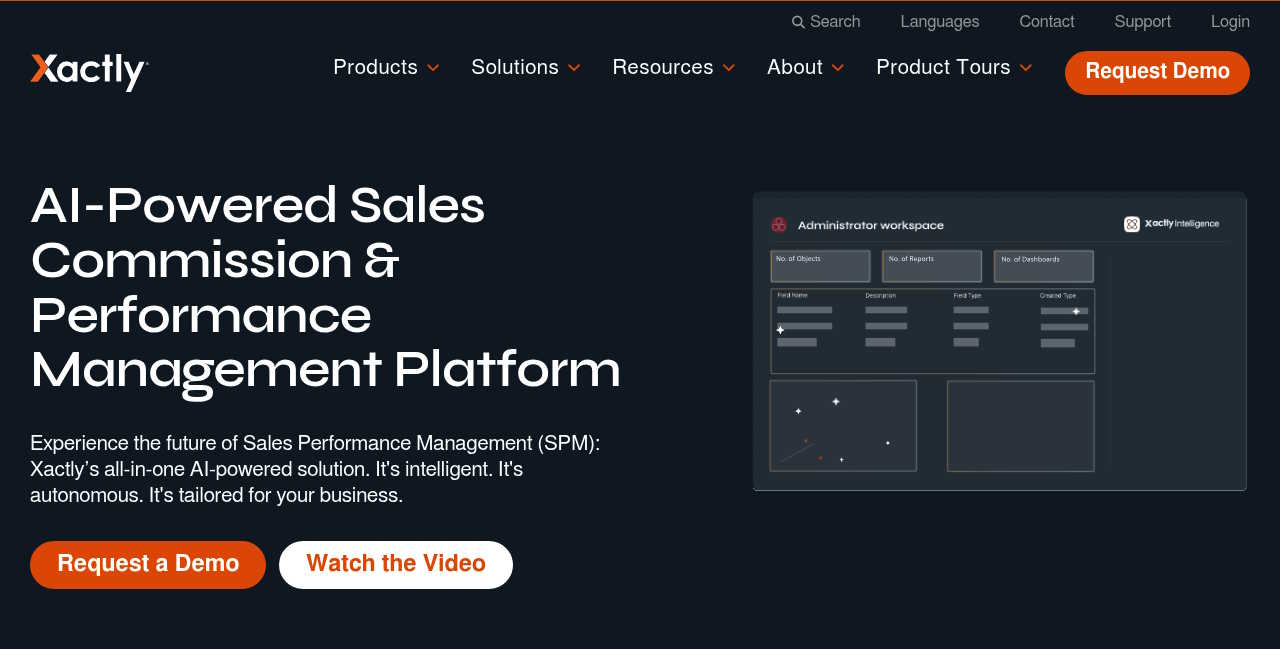
Xactly is the incumbent enterprise choice. It’s been in this market longer than most competitors, and it shows in the depth of its ASC 606 reporting, territory management, and forecasting modules. For publicly traded SaaS companies navigating finance compliance requirements, those capabilities matter.
The cost reflects the positioning: Vendr benchmarks put Xactly at $900–$1,800 per user per year, with implementation fees that can reach $150,000 for complex deployments. Plans typically take up to six months to go live, and ongoing changes usually require professional services support or a dedicated administrator.
For B2B SaaS companies that don’t need enterprise governance at that scale, the overhead is hard to justify. Faster, more flexible platforms handle the core use case at a fraction of the cost and timeline.
Best for: Large, publicly-traded SaaS enterprises with formal compensation operations teams and regulatory reporting requirements.
5. Everstage — Best no-code option for scaling SaaS teams
Everstage has built a reputation for a clean, no-code plan builder that RevOps teams can operate without engineering support. Its rep-facing dashboards include gamification features — leaderboards, goal tracking, real-time earnings projections — that genuinely drive motivation for high-velocity SaaS sales floors.
Pricing is transparent and scales with team size, which makes it easier to model ROI before a procurement process. Implementation is faster than CaptivateIQ or Xactly, and customer reviews consistently praise the UI and support team responsiveness.
For teams doing a direct comparison, Everstage vs EasyComp covers the key differences in plan complexity support and audit workflows.
Best for: Fast-growing SaaS RevOps teams that want a no-code platform with strong rep engagement features.
How to choose the right platform for your SaaS team
The honest answer is that no single platform fits every B2B SaaS company. Three factors should drive your evaluation:
Plan complexity. If your comp structure involves consumption-based triggers, multi-product splits, or frequent mid-year changes, you need a platform that can handle that without engineering tickets. EasyComp and Everstage score best here. Xactly can handle it too, but at much higher operational cost.
Team size and maturity. A 15-rep team doesn’t need the same governance architecture as a 300-rep global org. Simpler structures warrant simpler tools — QuotaPath or Commissionly can work fine for early-stage teams. Once you’re past 50 reps with more than three plan types, purpose-built platforms pay for themselves.
Rep trust and transparency. This one is underweighted in most evaluations, but it directly affects retention and performance. Reducing sales commission disputes starts with giving reps real-time visibility into their own earnings. Platforms where calculation logic is a black box — even if technically accurate — drive shadow accounting and erode culture.
For teams actively evaluating ICM software, the 2026 ICM buyer’s guide walks through the full framework, including what AI capabilities to look for and how to run a proper vendor evaluation.
Quick comparison
| Platform | Best for | Approx. pricing | Implementation |
|---|---|---|---|
| EasyComp | Modern SaaS RevOps | Custom | 1–3 weeks |
| CaptivateIQ | Structured mid-market | ~$660/user/yr | 8–12 weeks |
| Spiff | Salesforce-native teams | $700–$1,400/user/yr | 6–8 weeks |
| Xactly | Large enterprise compliance | $900–$1,800/user/yr | Up to 6 months |
| Everstage | No-code, scaling teams | Transparent/custom | 4–6 weeks |
The ICM software market is growing at roughly 16.8% annually, and adoption is accelerating as pay-for-performance becomes the dominant model — Visdum’s 2026 benchmarks show 71% of companies now running performance-based comp structures. Getting the tooling right matters more now than it did even two years ago.
If your team is still running compensation in spreadsheets, the case for replacing commission spreadsheets is straightforward: the operational risk, dispute volume, and close delays compound as headcount grows. Modern platforms pay back their cost quickly — and the best ones make your reps trust their paycheck, which is worth more than any dashboard feature.