Best Practices
Jan 26 2026

How to know your plan is driving the right behavior, paying fairly, and scaling with your business.
Sales compensation plans aren’t just a way to pay reps—they’re one of the strongest levers a revenue org has to shape behavior. In 2026, the stakes are even higher: hybrid selling is normal, AI is changing rep workflows, deal cycles are evolving, and boards expect clean, defensible incentive spend.
So how do you know your comp plan is actually working?
The best plans perform well across three dimensions:
Below are 10 metrics every Sales Ops, RevOps, and Finance team should track in 2026—plus what “good” looks like and what to do when the numbers say your plan is off.
What it measures: Whether your target is realistic—and whether you’re rewarding the right number of people.
How to calculate:
What “good” looks like (typical benchmark):
Red flags:
Why it matters in 2026: Companies are tighter on budgets, and “oops we overpaid” isn’t cute anymore.
What it measures: Whether your plan produces the earnings level you designed.
How to calculate:
What “good” looks like:
Red flags:
What it measures: Whether you’re paying efficiently for revenue output.
How to calculate:
Total incentive payouts ÷ total revenue credited (ARR, ACV, GM, etc.)
What “good” looks like:
Depends by segment and motion, but you want consistency over time and a ratio aligned with your unit economics.
Red flags:
2026 tip: If you’re selling multi-product bundles or usage-based components, track this by product line too.
What it measures: Whether your actual pay matches your intended pay mix design.
How to calculate:
Actual base pay ÷ total pay
Actual variable pay ÷ total pay
What “good” looks like:
Red flags:
Why it matters: Pay mix impacts rep behavior. Too much base can reduce urgency. Too much variable can increase churn.
What it measures: How quickly new reps become economically productive under your comp model.
How to calculate:
Median months from start date → first month hitting 80%+ attainment
What “good” looks like:
Red flags:
2026 reality check: If reps are expected to do more outbound + more admin + more tools, ramp time can silently creep up unless you adjust.
What it measures: Whether reps are closing the deals you want—not just the ones that pay fastest.
How to calculate (examples):
Track changes in deal profile after the plan launches:
What “good” looks like:
Red flags:
Key insight: If you don’t measure deal shape, reps will optimize for the scoreboard.
What it measures: How often the plan breaks in the real world.
How to calculate:
What “good” looks like:
Red flags:
Why it matters: Exceptions aren’t just annoying—they destroy trust and slow Finance close.
What it measures: Whether reps actually understand what drives earnings.
How to calculate:
Use a simple quarterly pulse survey:
What “good” looks like:
Red flags:
2026 note: Plans are getting more complex—so clarity is becoming a competitive advantage.
What it measures: Whether the revenue you’re incentivizing sticks and grows.
How to calculate (pick what matches your model):
What “good” looks like:
Red flags:
Why it matters: Paying for low-quality revenue feels good for 30 days and painful for 12 months.
What it measures: Whether commissions are forecastable—or constantly surprising.
How to calculate:
| Forecasted commission expense – actual payouts | ÷ forecasted expense
What “good” looks like:
Red flags:
2026 expectation: Finance will demand tighter accuracy as companies operate leaner.
A plan that motivates reps but wrecks margins isn’t “effective.”
A plan that’s efficient but impossible to understand won’t drive performance.
And a plan that’s accurate on paper but full of exceptions won’t scale.
In 2026, the best sales compensation plans win because they are:
✅ Behavior-aligned (they reward the deals you want more of)
✅ Operationally clean (they run without constant manual fixes)
✅ Predictable (payouts match what Finance expects)
✅ Trusted by reps (they can explain their paycheck)
If you track these 10 metrics every month, you’ll catch issues early—and have the proof to improve your plan before it becomes a morale problem or a budget fire drill.
By Jose Fernandez
https://www.linkedin.com/in/joseluisfernandez/
About The author
Jose Fernandez is part of the team behind EasyComp.ai, building infrastructure that helps companies run sales compensation without spreadsheets, confusion, or delays. He believes incentive systems should be easy to operate—and crystal clear to the people who earn them.

Gabe Salzer
Revenue Operations
Strategy - HIGHTOUCH

EasyComp is so intuitive that our sales team needed almost no training to get started. Now, our account executives have real-time payout visibility, with clear explanations that eliminate back-and-forth with operations, allowing them to stay focused on closing deals.
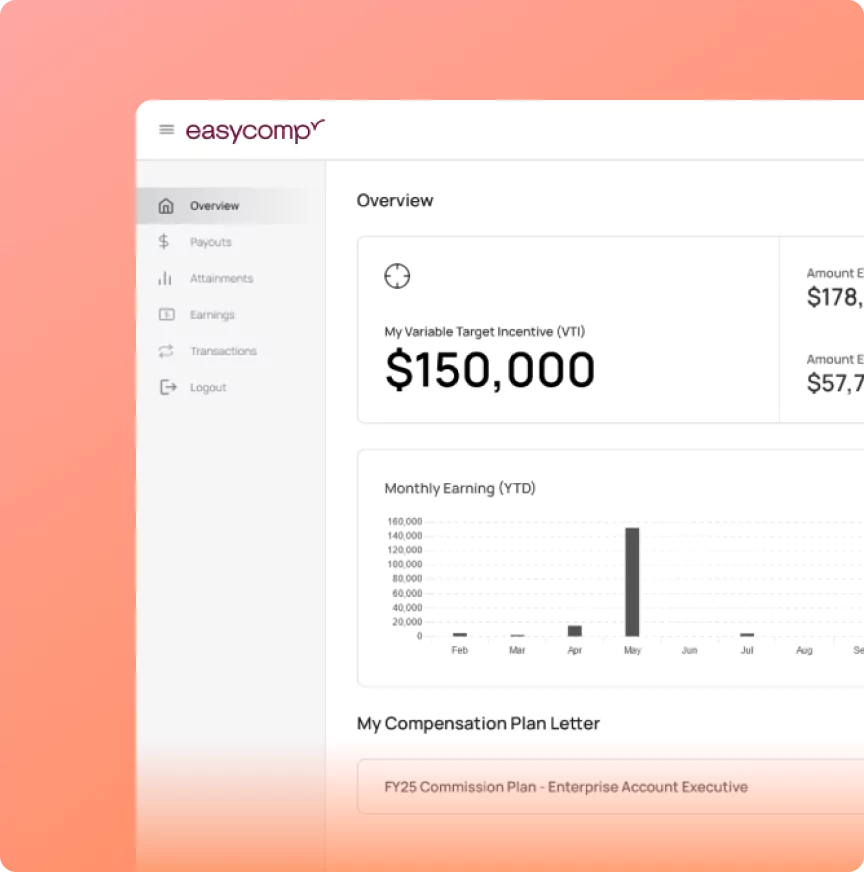

EasyComp's complete sales performance management platform streamlines compensation management for maximized revenue impact.

© 2024 EasyComp, Inc. All rights reserved.