This guide explains how to design a sales compensation plan that motivates reps, supports predictable growth, and remains easy for teams to understand and trust.
What Is a Sales Compensation Plan?
A sales compensation plan defines how sales representatives earn money for selling products or services. It typically includes base salary, commission structures, performance bonuses, and quota targets.
The goal of a compensation plan is to align rep incentives with company objectives—whether that means acquiring new customers, expanding existing accounts, or increasing recurring revenue.
The most effective plans are simple, predictable, and directly tied to measurable performance outcomes.
Why Sales Compensation Plans Matter
Sales compensation is one of the most powerful tools companies have for influencing behavior. When designed correctly, it helps organizations:
- Motivate high performance from sales reps
- Encourage focus on strategic products or markets
- Improve retention of top performers
- Align revenue growth with company strategy
- Create transparency and trust within the sales team
Poorly designed plans can have the opposite effect—confusing reps, creating disputes, and rewarding the wrong behaviors.
7 Principles of a Motivating Sales Compensation Plan
1. Align Incentives With Business Goals
Compensation plans should reinforce the outcomes your company values most. If your strategy prioritizes new customer acquisition, your commission structure should reward new logos more heavily than renewals. If expansion revenue matters most, upsells and cross-sells should drive payouts.
2. Keep the Plan Simple
Complex compensation plans reduce motivation because reps cannot easily predict their earnings. If a salesperson needs a spreadsheet to understand their commission, the plan is likely too complicated.
Simple rules lead to clearer incentives and better decision-making in the field.
3. Provide Clear Earnings Potential
Sales reps are highly motivated by visible earning potential. Your plan should clearly communicate:
- On-target earnings (OTE)
- Quota expectations
- Accelerators for exceeding quota
- How commissions scale with performance
Transparency around earnings potential helps attract and retain strong performers.
4. Use Accelerators to Reward Overperformance
Accelerators increase commission rates after a rep exceeds quota. They encourage top performers to keep pushing even after they hit targets.
For example:
- 0–100% of quota: 10% commission
- 100–120% of quota: 15% commission
- 120%+ of quota: 20% commission
This structure rewards exceptional performance without increasing fixed costs.
5. Balance Base Salary and Commission
The base-to-variable ratio determines risk and motivation for sales reps. Common benchmarks include:
- 50/50 split for most SaaS account executives
- 60/40 for enterprise sales roles
- 70/30 for customer success or renewals roles
Higher variable compensation typically drives stronger performance incentives.
6. Ensure Payout Timing Feels Fair
When payouts lag far behind deal completion, motivation declines. Reps prefer compensation that feels closely tied to their actions.
Many companies book commission earnings when deals close and pay them when invoices are collected to balance motivation and financial risk.
7. Provide Visibility Into Earnings
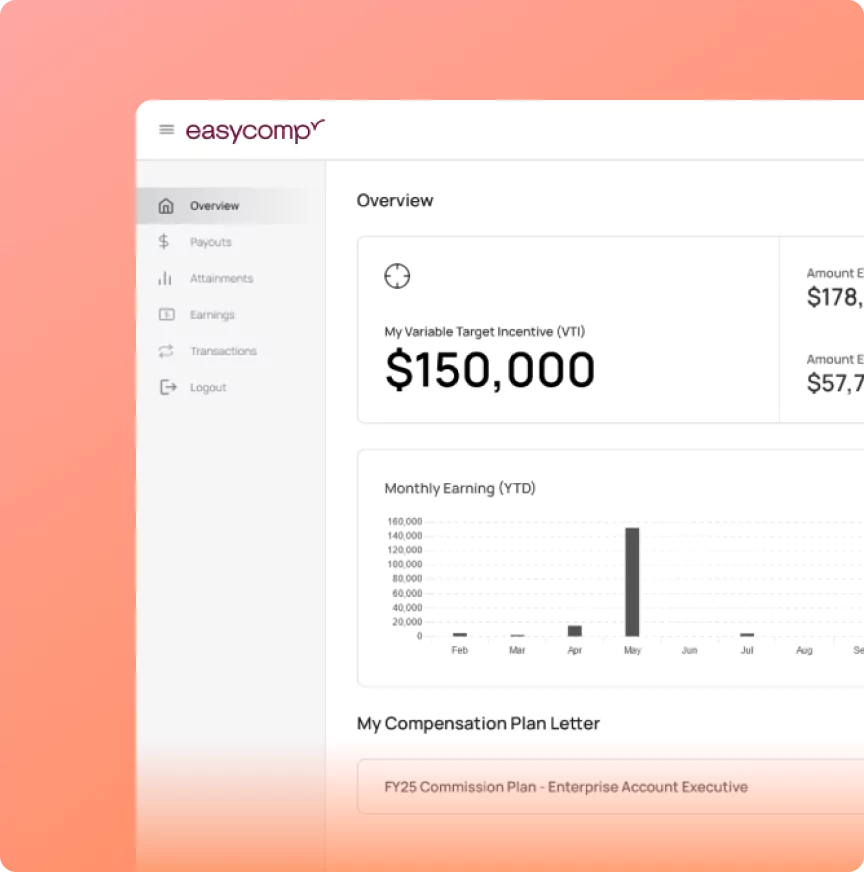
Reps perform better when they can easily see how their deals translate into commission. Clear breakdowns of calculations and payouts build trust in the compensation system.
Modern sales compensation platforms, such as EasyComp, focus on making commission calculations easier to understand so reps can see exactly how their earnings were determined.
Common Sales Compensation Structures
Different organizations use different compensation models depending on their sales motion and revenue model.
Base Salary + Commission
The most common structure combines a fixed salary with commissions tied to quota performance.
Commission-Only
Used primarily in industries such as real estate or insurance, where compensation is entirely tied to sales performance.
Tiered Commission
Commission rates increase as revenue thresholds are exceeded, encouraging higher performance.
Bonus-Based Plans
Some companies supplement commissions with quarterly or annual bonuses tied to team or company performance.
Mistakes to Avoid When Designing Compensation Plans
- Overly complex formulas that reps cannot understand
- Misaligned incentives that reward the wrong deals
- Delayed payouts that weaken motivation
- Lack of transparency around commission calculations
- Frequent plan changes that reduce trust
Avoiding these pitfalls helps ensure compensation motivates the behaviors your organization wants.
Frequently Asked Questions
What makes a good sales compensation plan?
A good sales compensation plan is simple, aligned with company goals, and provides clear earning potential. It should reward performance, motivate reps to exceed quota, and make commission calculations easy to understand.
How do you motivate sales reps with compensation?
Sales reps are motivated by clear quotas, visible earnings potential, accelerators for exceeding targets, and transparent payout calculations. Compensation plans that link effort directly to earnings tend to drive stronger performance.
What percentage commission do sales reps typically earn?
Commission rates vary widely by industry, but many SaaS sales roles earn between 8% and 15% of revenue on deals, often combined with a base salary and quota-based accelerators.
How often should sales compensation plans change?
Most companies review compensation plans annually. Frequent changes can reduce trust among sales reps, so adjustments should be thoughtful and clearly communicated.
Final Thoughts
Designing a motivating sales compensation plan requires balancing simplicity, fairness, and strategic alignment. When incentives clearly reward the behaviors that drive growth, sales teams become more focused, engaged, and productive.
Companies that invest in clear commission structures—and tools that explain how earnings are calculated—often see stronger trust between leadership and the sales team.