Best Practices
Jan 23 2026

In sales, not every deal follows a clean storyline. Some opportunities are sourced, nurtured, and advanced by one person—only to be closed by someone else who happens to be assigned the account at the right moment. These are often called “bluebird” or windfall deals: deals that land quickly or unexpectedly, where the closing rep may not have done the foundational work.
Handled well, these deals can be motivating and healthy for the business. Handled poorly, they can create mistrust, resentment, and unpredictable compensation outcomes.
Here’s a balanced approach to navigating bluebird and windfall deals—what companies can do, what AEs can do, and how comp plan language can prevent surprises.
First: Define the Real Problem (Without Blame)
A windfall situation usually triggers two competing truths:
The AE’s truth: “I closed the deal. Closing is the job. I should get paid on revenue I’m responsible for booking.”
The team’s truth: “Someone else sourced it, built the relationship, ran the process, or set up the win. Paying the full commission may feel unfair.”
The tension isn’t about whether the deal should be paid. It’s about how to allocate credit when effort and timing don’t align.
The goal should be to protect three things at once:
Trust in the compensation system
Motivation to close business quickly
Fairness across the team (including behind-the-scenes contributors)
There’s no single “right” answer. The best approach depends on your comp philosophy, sales motion, and how often these scenarios occur.
Best when: the AE truly owned the close, there’s no clear prior owner, or speed matters more than precision.
Why companies choose this:
Keeps comp simple, predictable, and fast
Reinforces closing behavior
Avoids slow disputes and internal politics
Minimizes time spent adjudicating “who did what”
Tradeoff:
This can feel unfair to those who built the pipeline, and it may discourage long-term pipeline creation if people believe someone else will collect the reward later.
Good fit for:
High-velocity transactional sales
Environments where “territory ownership” is the primary rule
Organizations optimizing for speed, simplicity, and low admin overhead
Best when: there’s documented prior work, clear ownership transfer, or meaningful contribution by someone else.
Why companies choose this:
Creates space to acknowledge both the closer and the builder
Reduces “winner takes all” outcomes that frustrate teams
Helps prevent unhealthy behavior like hoarding accounts or fighting for credit
Tradeoff:
Without clear rules, “partial payments” can feel subjective. AEs may perceive them as arbitrary, inconsistent, or unfair.
Good fit for:
Enterprise sales with longer cycles
Teams where handoffs happen regularly (SDR → AE, AE → AE, or region changes)
Environments where collaboration and continuity matter
Best when: both reps can point to clear, material contributions.
Split structures vary widely:
50/50 (simple but not always accurate)
Originator/Closer split (e.g., 30/70)
Stage-based split (credit based on where the deal was when ownership changed)
Strength:
Fairer than “all or nothing” and reduces resentment.
Risk:
Over time, split logic can become complex unless it’s standardized and well-documented.
Best when: you want to preserve clean AE payout rules and reward meaningful contributors.
Some companies pay the AE in full, then use:
discretionary bonuses,
SPIFFs,
manager awards,
pipeline creation incentives,
or team quotas.
This is less about “reducing” someone’s commission and more about adding recognition elsewhere.
The Biggest Lever: Comp Plan Language That Preempts the Drama
The most painful windfall disputes happen when comp plans are written like every deal is straightforward.
A strong plan should do two things:
1) Set the default expectation
For example:
“Commissions are paid to the AE assigned to the account at booking,” or
“Commissions follow the opportunity owner at the time of close,” or
“Credit is determined by the company based on contribution and ownership history.”
Whatever your philosophy is, state it clearly.
2) Leave room for judgment when reality gets messy
Windfalls aren’t always predictable. The comp plan should include language that gives the company discretion without making reps feel powerless.
Practical examples of “leeway language” (in plain English):
The company may adjust credit for disputes, territory changes, or reassignments
The company may allocate commissions when more than one person materially contributed
The company may require documentation to validate claims of prior work
This protects the business while reducing the odds that disputes become emotional or personal.
Key point: The goal isn’t to create loopholes. It’s to create clarity and a fair mechanism when exceptions happen.
From the AE Perspective: How to Protect Yourself (Without Burning Trust)
If you’re an AE stepping into a deal that looks unusually “easy,” it’s smart to pause and clarify expectations early.
Ask the question before you invest energy
The simplest, healthiest move is to ask:
“If I get involved here, what will the commission structure be if it closes?”
That conversation is best had:
before the deal closes
ideally before you become the primary AE working it
and definitely before it becomes emotionally charged
Why this matters
Many AEs only discover the payout structure after the deal is closed—when it’s too late to set expectations. That’s when comp disputes become personal, tense, and reputation-impacting.
Being proactive is not greedy. It’s professional.
Put It in Writing: The Addendum Approach
Verbal alignment helps, but memories get fuzzy when money is on the line. For windfall deals or account transitions, AEs can request a lightweight written agreement:
A short email recap
A manager-approved note in CRM
A formal addendum to the comp plan letter (if your company supports it)
It can be as simple as:
who owns the deal for commission purposes
what “split” (if any) applies
what conditions could change the payout
confirmation that everyone agrees
This protects both the AE and the company. It reduces confusion, speeds up payroll, and prevents disputes later.
A Practical Framework for Fair Negotiation
Whether you’re the company deciding payouts or the AE advocating for credit, the best outcomes come from focusing on facts—not feelings.
Useful inputs:
When was the deal created, and by whom?
What stage was it in at the time of handoff?
Who ran discovery, pricing, security review, legal, procurement?
Who navigated the final approvals and signature?
Was this truly a windfall, or just an efficient close?
Was there an official territory/account assignment change?
What does the comp plan say—and what discretion does it allow?
The point isn’t to over-litigate. It’s to make sure the payout is defensible and consistent.
The Best Outcome Is Predictability
Windfalls will always exist. The healthiest sales orgs don’t pretend otherwise—they build a system that:
pays people promptly,
stays consistent across cases,
rewards real contribution,
and encourages early communication.
For companies, that means comp plans that are clear and flexible.
For AEs, that means asking early, aligning expectations, and getting clarity in writing.
Because the real enemy isn’t the “bluebird deal.”
By Jose Fernandez
https://www.linkedin.com/in/joseluisfernandez/
About The author
Jose Fernandez is part of the team behind EasyComp.ai, building infrastructure that helps companies run sales compensation without spreadsheets, confusion, or delays. He believes incentive systems should be easy to operate—and crystal clear to the people who earn them.

Gabe Salzer
Revenue Operations
Strategy - HIGHTOUCH

EasyComp is so intuitive that our sales team needed almost no training to get started. Now, our account executives have real-time payout visibility, with clear explanations that eliminate back-and-forth with operations, allowing them to stay focused on closing deals.
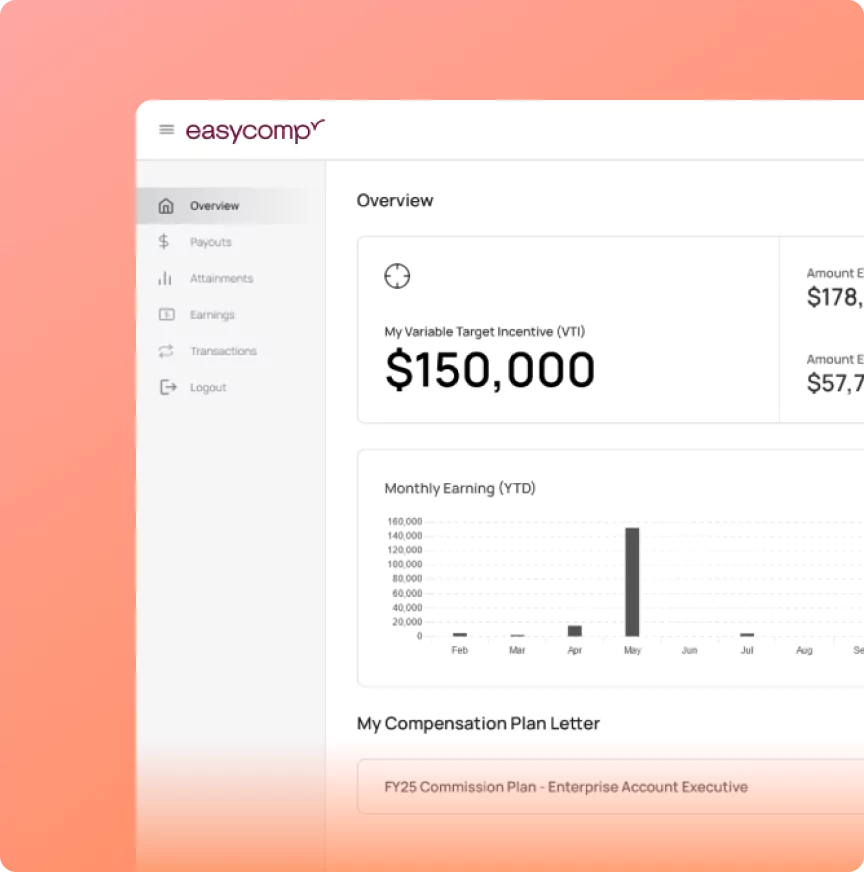

EasyComp's complete sales performance management platform streamlines compensation management for maximized revenue impact.

© 2024 EasyComp, Inc. All rights reserved.