Best Practices
Jan 28 2026
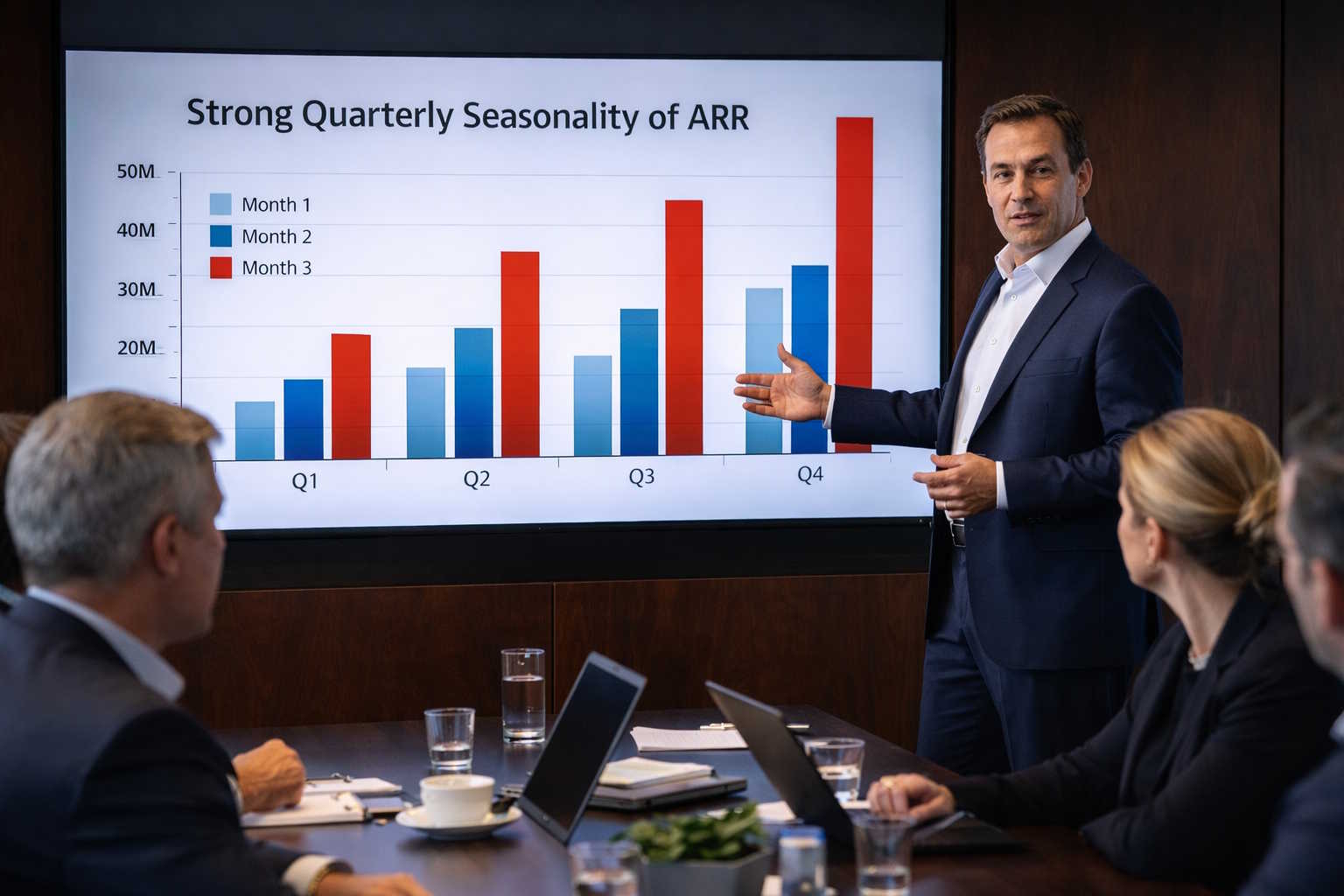
In some quarters, I’ve watched 30–40% of bookings come in the last 10 business days.
If you’ve worked in SaaS sales long enough, you’ve seen the pattern:
A huge portion of ARR closes in the last month of the quarter.
Often, an even more shocking share lands in the final two weeks.
In some quarters, I’ve watched 30–40% of bookings come in the last 10 business days.
At first glance, this feels like a harmless rhythm of business.
But anyone in Sales Ops, Finance, Legal, or Deal Desk knows the reality:
Quarter-end compression isn’t just stressful — it’s expensive.
Contracts pile up for legal review
Discounting spikes
Forecasts become unstable
Operations teams burn out
And rushed deals can mean value left on the table
So naturally, the question comes up:
Is this inevitable? Or is it something we’ve created through incentives?
End-of-quarter deal clustering is often explained as “just how buyers behave.”
And yes — procurement cycles, budgeting timelines, and board approvals matter.
But sellers also operate inside a system full of artificial deadlines:
Quarterly quota cliffs
Accelerator thresholds
QBR pressure
“Must-close-this-quarter” executive scrutiny
The calendar becomes a forcing function.
Which raises a deeper question:
If we changed incentives, could we change the timing of revenue?
In a previous role, we tested a straightforward comp experiment:
Close in Month 1 → +2% commission bonus
Close in Month 2 → +1% commission bonus
Close in Month 3 → No bonus (standard plan)
The goal was simple:
Pull deals forward. Smooth out the quarter. Reduce the crunch.
And technically… it worked.
But not in the way we expected.
One seller had a very large deal in flight.
For that deal, an extra 2% commission wasn’t a small nudge.
It represented real money.
So the seller did what incentives are designed to do:
They moved mountains to accelerate the customer timeline.
Pulled stakeholders together
Escalated internally
Negotiated harder
Created urgency
The deal closed in Month 1.
The needle moved.
Smaller deals?
Almost no change.
For those opportunities, the bonus simply wasn’t enough to justify:
Fighting procurement delays
Applying pressure to customers
Spending political capital
Pulling deals forward at all costs
The incentive was meaningful at the top… and irrelevant in the middle.
This is one of the most underappreciated truths in sales compensation:
The same incentive can produce wildly different behaviors depending on deal size.
A 2% bonus is:
Life-changing on a $1M deal
Barely noticeable on a $20K deal
So comp experiments often don’t shift the whole curve.
They shift the extremes.
There was another concern too:
If sellers know Month 1 always pays more, what stops them from delaying deals?
A predictable pacing bonus could create gaming behavior:
Deals pushed out of Month 3
Deals artificially timed into the next quarter
Sellers optimizing commission, not revenue
And in practice, quarterly quota pressure often dominates…
…but comp plans always create second-order effects.
Which leads to an uncomfortable conclusion:
There is no “perfect” incentive. Only trade-offs.
The biggest takeaway from this experience wasn’t that pacing bonuses are bad.
It was something deeper:
Compensation design should be treated like experimentation, not doctrine.
Too often, companies make comp decisions based on intuition:
“This should motivate sellers.”
“This should smooth revenue.”
“This should reduce discounting.”
And then they never validate the outcome.
At EasyComp, we believe the future of commissions management looks different:
Run controlled compensation experiments
Measure behavioral impact
Look at distribution shifts, not anecdotes
Accept when something didn’t work
Learn, iterate, and improve
Because comp is one of the most powerful levers a business has…
…and one of the least scientifically managed.
End-of-quarter compression may never disappear completely.
Customers have their own calendars.
But incentives shape seller behavior more than most organizations admit.
The question isn’t:
Can we eliminate the quarter-end rush?
It’s:
Can we design systems that are honest, measurable, and adaptive — rather than chaotic and reactive?
That’s the kind of compensation management we’re building toward at EasyComp.
By Jose Fernandez
https://www.linkedin.com/in/joseluisfernandez/
About The author
Jose Fernandez is part of the team behind EasyComp.ai, building infrastructure that helps companies run sales compensation without spreadsheets, confusion, or delays. He believes incentive systems should be easy to operate—and crystal clear to the people who earn them.

Gabe Salzer
Revenue Operations
Strategy - HIGHTOUCH

EasyComp is so intuitive that our sales team needed almost no training to get started. Now, our account executives have real-time payout visibility, with clear explanations that eliminate back-and-forth with operations, allowing them to stay focused on closing deals.
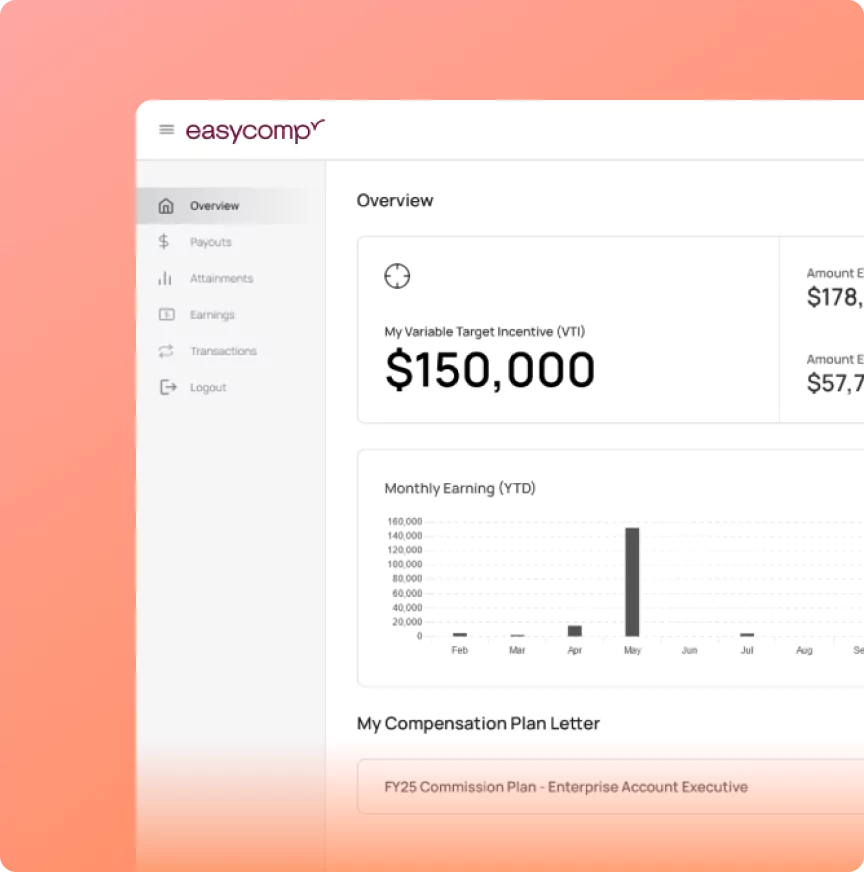

EasyComp's complete sales performance management platform streamlines compensation management for maximized revenue impact.

© 2024 EasyComp, Inc. All rights reserved.