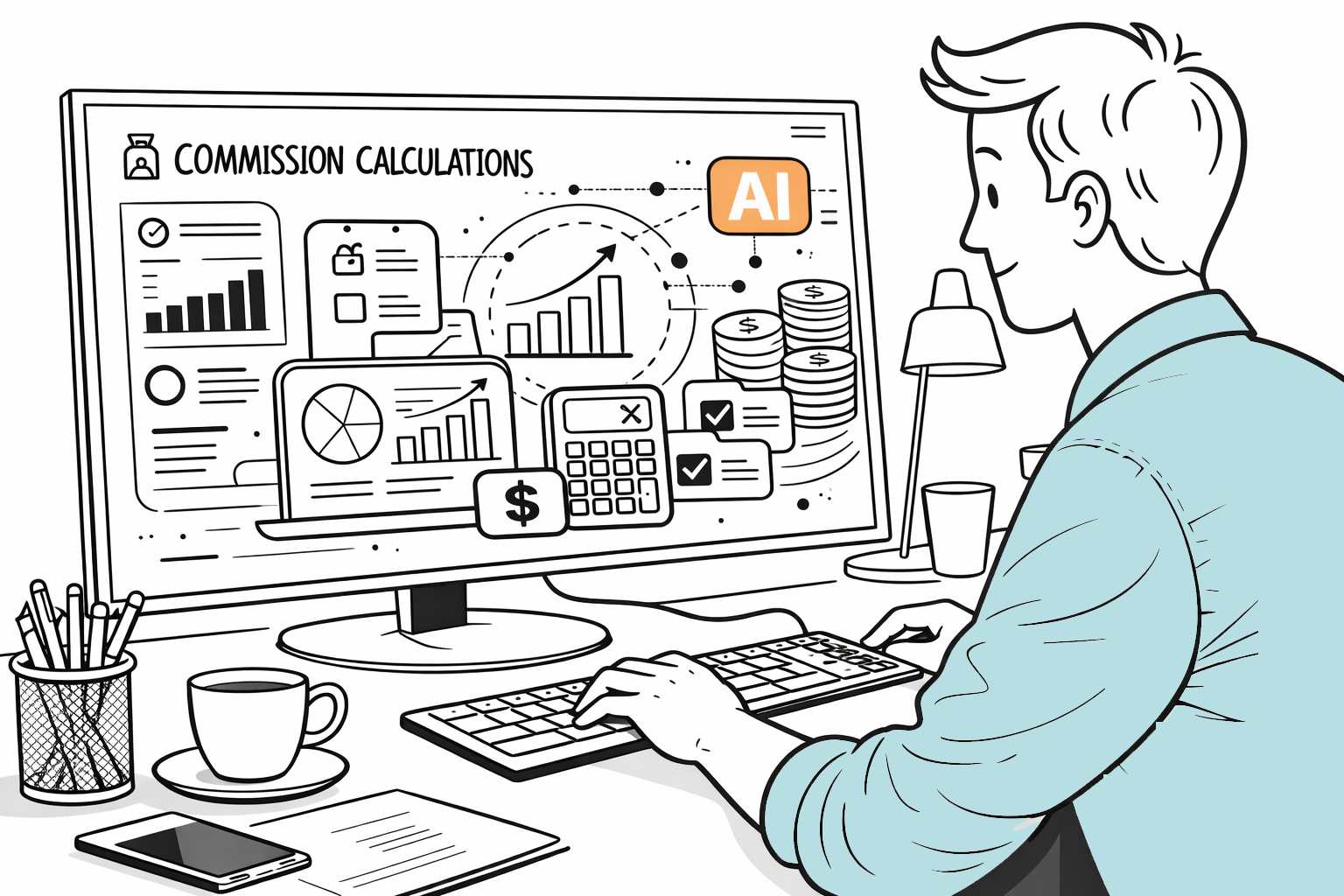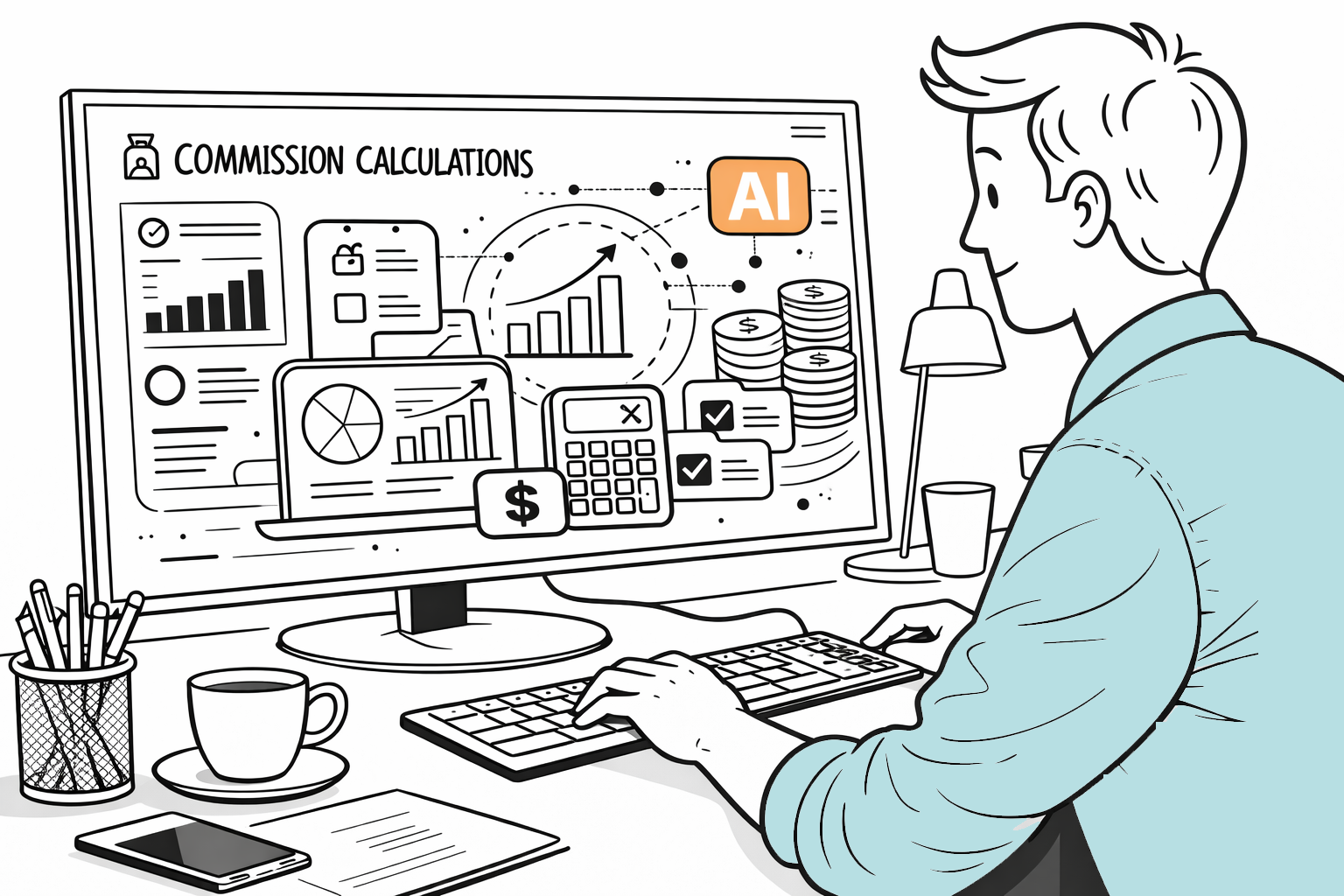
If you’ve ever spent sleepless nights double-checking commission logic, fielded angry calls from reps questioning their payouts, or felt like you need a PhD to manage your comp plans, you’re not alone. The good news is that AI is changing how companies calculate commissions, and it’s a lot simpler and saner than most people think.
I’ll never forget the day our CRO cornered me in the hallway with a spreadsheet in one hand and frustration written all over his face.
“This took me three hours to figure out, and I’m still not 100% sure it’s right,” he said, tapping a maze of commission calculations that looked more like advanced calculus than simple math.
Sound familiar?
Why traditional commission calculations are broken
Let’s talk about the elephant in the room. For most organizations, commission calculations still live in some combination of spreadsheets, manual exports, and what I like to call “hope math.” You hope everything adds up when you hit send on those payout reports.
The reality is that companies using traditional methods are losing more than just time. Workday Adaptive Planning has cited that businesses using AI-driven planning and automation can reduce processing time dramatically, up to 93% in some cases. Even if your mileage varies, anyone who has lived in spreadsheet-land knows the direction is always the same. Faster cycles, fewer errors, less chaos.
Here’s what typically goes wrong with manual calculations:
Human error multiplies quickly
One misplaced decimal, one broken reference, one version-control nightmare, and suddenly you’re staring at thousands of dollars in overpayments or underpayments. Once your sales team loses trust in the numbers, rebuilding that confidence becomes an uphill climb.
Complexity turns into a comp plan nightmare
Multi-tier structures, splits, accelerators, draws, clawbacks, holdouts. Every layer of complexity increases the chance of errors and the time it takes to validate everything.
Visibility is basically nonexistent
When calculations live in spreadsheets passed between Finance and RevOps, nobody has real-time clarity. Reps build their own shadow trackers because they don’t trust the official numbers. Leaders struggle to forecast cleanly. Finance gets stuck playing referee.
How AI transforms commission calculations
Think of AI-powered commission systems as having a brilliant accountant who never sleeps, never gets tired, and doesn’t accidentally overwrite cell G47.
Automated data integration
Instead of manually pulling data from your CRM, spreadsheets, and random internal exports, modern platforms connect directly to systems like Salesforce, HubSpot, and ERPs via APIs. When a deal closes, the data flows into the commission engine automatically. No copy and paste required.
This isn’t just convenient. It’s the difference between commissions week being a recurring fire drill and it being a background process.
As a quick example, teams we work with at EasyComp, have cut 15 or more hours per month of data gathering down to essentially zero once they stop doing manual exports and reconciliation. That time goes back to real work, like strategy, analysis, and improving the plan.
Intelligent rule configuration
This is where things go from nice to genuinely game-changing.
Instead of fragile spreadsheet formulas that break the moment your comp plan changes, AI systems let you configure rules in a way that’s easier to audit and harder to accidentally destroy. Multi-tier structures, accelerators, splits, retro adjustments, clawbacks. The system applies the logic consistently.
At EasyComp, one thing we’ve leaned into is making that rule logic understandable, not just configurable, so teams don’t trade spreadsheet chaos for black-box software.
Real-time processing with guardrails
Traditional manual calculations can take days or weeks to finalize. AI-driven systems can calculate in near real time as deals, invoices, and payments land.
Speed without accuracy is just fast mistakes. That’s why strong systems flag anomalies automatically, including unusual payouts, inconsistent data, outliers, and missing fields. Humans review the exceptions instead of manually rechecking everything.
Transparency that actually builds trust
This might be the most underrated benefit.
Modern platforms give reps a live view of how commissions are calculated, deal by deal, with the reasoning behind every number. When people can see how each transaction contributes to their earnings, trust goes up and frustration drops.
When trust goes up, reps stop wasting time building their own commission trackers and go back to selling.
The practical benefits you’ll actually feel
Here’s what typically happens in the first 90 days after implementing an AI commission system:
Finance teams breathe easier
The administrative burden drops. Tasks that used to consume a meaningful chunk of someone’s month shrink to review and approve. That freed time shifts to higher-value work like compensation strategy, forecasting, and analysis.
Sales leaders get better insights
AI doesn’t just calculate. It helps teams understand performance patterns, including what structures motivate behavior, where accelerators kick in, how changes affect attainment, and what future commission expense is likely to look like.
Reps gain confidence and clarity
When reps trust that commissions are calculated fairly and accurately, morale improves. They plan financially with confidence. They understand exactly which actions drive earnings. They stop treating payout day like a suspense thriller.
Your organization becomes more agile
Need to launch a new SPIFF? Add a temporary kicker for a product line? Adjust attainment thresholds? What used to require spreadsheet surgery can now be done quickly and rolled out cleanly.
Getting started: a practical AI implementation roadmap
If you’re ready to move beyond manual calculations, here’s how to do it without overwhelming your team:
- Map the current workflow honestly. Document steps, handoffs, sources of truth, and where the pain lives. This becomes your implementation blueprint and your baseline for measuring improvement.
- Clean your data first. AI can’t fix messy inputs. Make sure CRM fields are accurate, close dates are reliable, products are categorized correctly, and ownership logic is consistent.
- Define rules in plain English. Before building anything, document the plan as if you were explaining it to a new hire. Rates, tiers, eligibility, exceptions, special cases, everything.
- Implement in phases. Start with one team or one plan. Prove it out, refine the logic, then expand. Phased rollouts reduce risk and build confidence.
- Over-communicate and train. The rollout succeeds when reps trust the system. Training should help reps feel like they can verify their earnings, not just view them.
The future is already here
The commission calculation landscape has changed. Companies still relying on manual processes aren’t just inefficient. They’re operating with avoidable risk and unnecessary friction.
The organizations winning top sales talent are the ones offering accuracy, clarity, and trust in compensation.
AI-powered commission systems aren’t futuristic anymore. They’re quickly becoming the standard for teams who want to scale without chaos.
The question isn’t whether to adopt AI for commissions. It’s how quickly you can stop doing hope math and start running comp like the modern business function it is.
And if you want a practical place to start, tools like EasyComp are built to take spreadsheet pain away without turning commissions into a black box.
By Jose Fernandezhttps://www.linkedin.com/in/joseluisfernandez/
About The author
Jose Fernandez is part of the team behind EasyComp.ai, building infrastructure that helps companies run sales compensation without spreadsheets, confusion, or delays. He believes incentive systems should be easy to operate—and crystal clear to the people who earn them.