Best Practices
Jan 26 2026

Your first sales compensation plan is more than a payout model — it’s a blueprint for behavior.
It affects how your team prioritizes deals, how accurately you can forecast, how confident reps feel about their earnings, and how much time leadership spends resolving disputes. Most importantly, it shapes what your company optimizes for in the earliest and most fragile stage of growth.
If you’re a startup building your first comp plan, here are the top 10 considerations to get right from day one.
Before you choose commission rates or accelerators, define what the company is optimizing for:
Your compensation plan should reward the outcomes that matter most right now. If your goal is new ARR but you pay heavily on upsells, don’t be surprised when pipeline skews away from new business.
Pro tip: Write a one-sentence objective like:
“We pay most for net new ARR and reward faster cash collection.”
One of the biggest decisions in early-stage sales compensation is when reps earn commissions.
Common choices:
Your choice should match your startup’s financial reality — not just what “sounds fair.”
Most comp plans fail due to ambiguity, not math.
You need clear rules for what counts as commissionable revenue:
A startup comp plan should eliminate “gray area deals” as much as possible.
Crediting rules matter because they influence internal collaboration.
Define upfront:
Even simple split rules prevent chaos later — especially once deals start getting larger.
Your first comp plan lives or dies by quota design.
Early-stage startups often lack historical performance data, so quota setting will be imperfect — but it can’t be random.
Strong quota practices include:
A good target: most fully ramped reps should hover around quota, with top performers overachieving.
If your reps can’t predict what they’ll earn, motivation drops — and disputes rise.
Your first plan should optimize for clarity:
If the plan needs a multi-tab spreadsheet and a training course to understand, it’s too complicated for “Version 1.”
Accelerators can be powerful, but startups underestimate how quickly they can create payout variance.
Questions to ask before adding accelerators:
Accelerators can work well — but only when modeled intentionally.
Comp plans shape behavior — including behavior you didn’t intend.
Examples of common gaming dynamics:
Avoid this by implementing guardrails like:
You don’t need complexity — you need clear rules.
Even a great comp plan fails if payouts are unpredictable.
Make payout mechanics explicit:
Consistency matters. Reps plan their finances around expected payout timing.
The fastest way to lose rep trust is forcing them to “guess” if they got paid correctly.
Your team should be able to see:
When commissions are explainable, disputes disappear — and reps sell more.
Use this checklist before rollout:
✅ Clear comp plan objective tied to GTM goals
✅ Simple earning event (bookings, collections, or hybrid)
✅ Written definitions for commissionable revenue
✅ Ownership and split rules established
✅ Realistic quotas and ramps
✅ Minimal complexity (rep can understand it fast)
✅ Accelerator exposure modeled
✅ Guardrails against gaming
✅ Payout timing consistent and documented
✅ Commission math is auditable and easy to verify
Most startups run comp in spreadsheets at the beginning — until something breaks:
EasyComp is built to help startups launch and scale compensation without the spreadsheet chaos.
With EasyComp, you get:
If you’re setting your first plan now, the best time to operationalize comp is before it becomes painful.
EasyComp helps startups pay correctly, explain clearly, and scale confidently.
By Jose Fernandez
About the Author
Jose Fernandez is part of the team behind EasyComp.ai, building infrastructure that helps companies run sales compensation without spreadsheets, confusion, or delays. He believes incentive systems should be easy to operate—and crystal clear to the people who earn them.
Sources: What Startups Should Look For When Setting Up Their First Sales Comp Plans

Gabe Salzer
Revenue Operations
Strategy - HIGHTOUCH

EasyComp is so intuitive that our sales team needed almost no training to get started. Now, our account executives have real-time payout visibility, with clear explanations that eliminate back-and-forth with operations, allowing them to stay focused on closing deals.
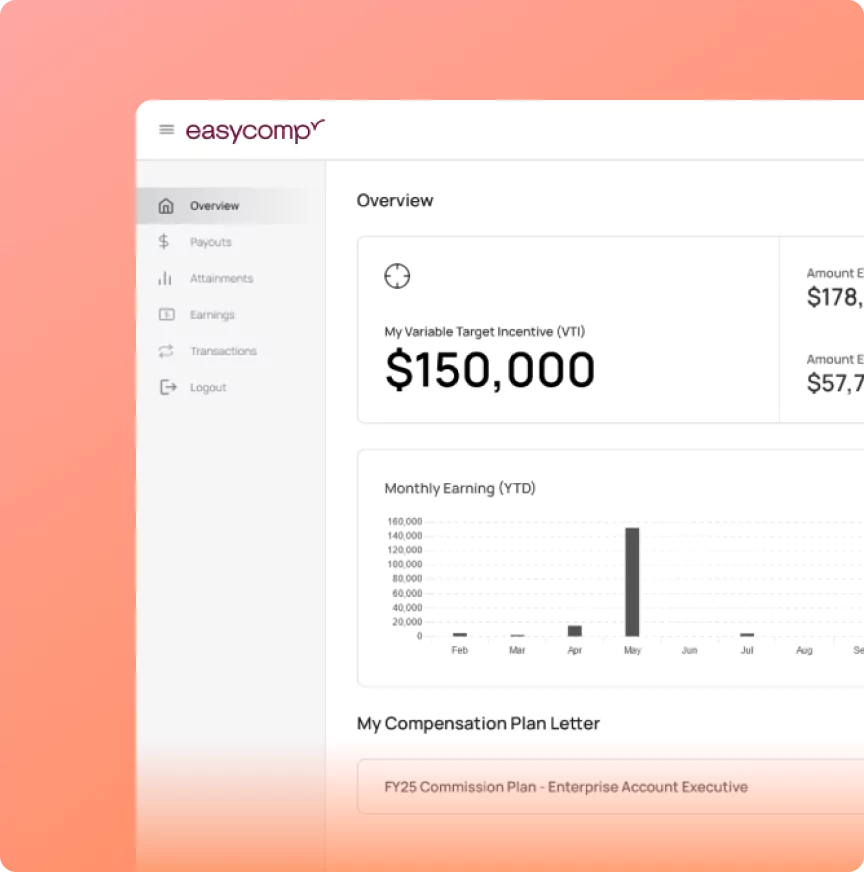

EasyComp's complete sales performance management platform streamlines compensation management for maximized revenue impact.

© 2024 EasyComp, Inc. All rights reserved.